How to use the baby hair color predictor
- Select the father's natural hair color — his childhood color if you know it.
- Select the mother's natural hair color the same way.
- Add grandparent hair colors if known, to surface recessive shades like red or blonde.
- Press Calculate to see the probability of each shade, plus a plain-language summary.
- Share the result with your partner using the share row once you're done.
Use natural, undyed color, and where possible each parent's color as a young child — hair often darkens with age, so an adult's current shade can understate the darker genes they carry.
How baby hair color is inherited
Hair color comes from two pigments. Eumelanin produces black and brown; its near-absence produces blonde. Pheomelanin produces red and golden tones. Darker alleles are generally dominant in hair color genetics, which is why two dark-haired parents most often have dark-haired children, and why a baby hair color chart by parents leans heavily toward whichever shade is more dominant between them.
Red hair and the MC1R gene
Red hair is linked to recessive variants of MC1R[1] — a child needs the variant from both parents to have visibly red hair, which is why it can appear in a family of brunettes when both parents are silent carriers. Roughly 1–2% of people worldwide have red hair, rising to around 10% in Ireland and Scotland. This recessive inheritance pattern is the same reason a hair color genetics chart often surprises parents who don't see red hair anywhere nearby in their own generation.
Hair color probability chart
| Parent 1 | Parent 2 | Black | Dark brown | Light brown | Blonde | Red |
|---|---|---|---|---|---|---|
| Black | Black | 70% | 22% | 5% | 2% | 1% |
| Black | Blonde | 32% | 38% | 20% | 8% | 2% |
| Dark brown | Dark brown | 22% | 52% | 18% | 6% | 2% |
| Dark brown | Blonde | 10% | 35% | 33% | 19% | 3% |
| Light brown | Light brown | 6% | 24% | 45% | 22% | 3% |
| Blonde | Blonde | 1% | 6% | 20% | 70% | 3% |
| Red | Red | 2% | 6% | 12% | 10% | 70% |
| Red | Dark brown | 12% | 38% | 22% | 8% | 20% |
Will my baby's hair color change?
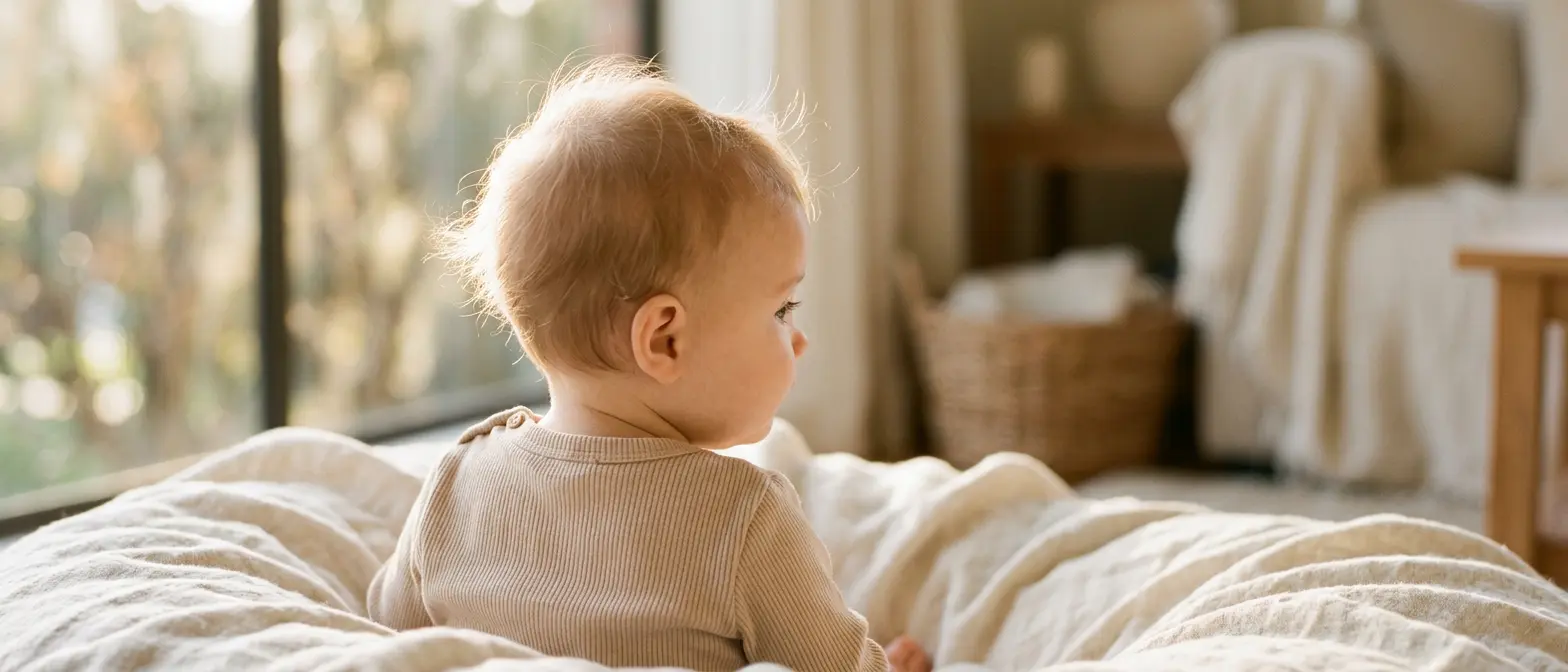
Almost certainly. Many babies are born with fine, light hair that falls out within months (a normal process called telogen effluvium) and regrows in a different color and texture. The general pattern is darkening — a child blonde at three may be light brown at ten and dark brown as an adult. Red hair tends to be more stable once established.
Genetics terms related to hair color prediction
- Eumelanin
- The pigment responsible for black and brown hair tones; more of it produces darker hair.
- Pheomelanin
- The pigment responsible for red and golden-yellow tones in hair, skin and freckling.
- MC1R gene
- The gene most strongly linked to red hair; two recessive copies are typically needed for red hair to appear.
- Silent carrier
- A parent who carries a recessive hair-color allele, like red or blonde, without it being visible in their own hair.
- Natural vs. childhood color
- The undyed color a person was born with or had as a young child — the most genetically accurate input for any hair color calculator.
Limitations of hair color prediction
- Adult color misleads — using current rather than childhood color is the most common source of error.
- Many genes, small effects — beyond MC1R, most contributing genes can't be inferred from appearance.
- Baby hair is temporary — birth color often has little relationship to the eventual adult color.
Sources
- National Library of Medicine, MedlinePlus Genetics — Is hair color determined by genetics?
- National Library of Medicine, MedlinePlus Genetics — MC1R gene
Frequently asked questions
Yes — if both carry recessive light-hair alleles that aren't expressed in their own hair, a child can inherit both and be blonde.
Red hair is recessive and linked to MC1R. Both parents can be silent carriers, often with red hair appearing in a grandparent or further back.
No. Birth hair amount varies enormously and has no bearing on eventual hair thickness or color.
Most children's hair color stabilizes by puberty, though gradual darkening can continue into the late teens or early twenties.
No — always use natural color, since dye carries no genetic information.